ELLE | SPAIN
Time to Heal
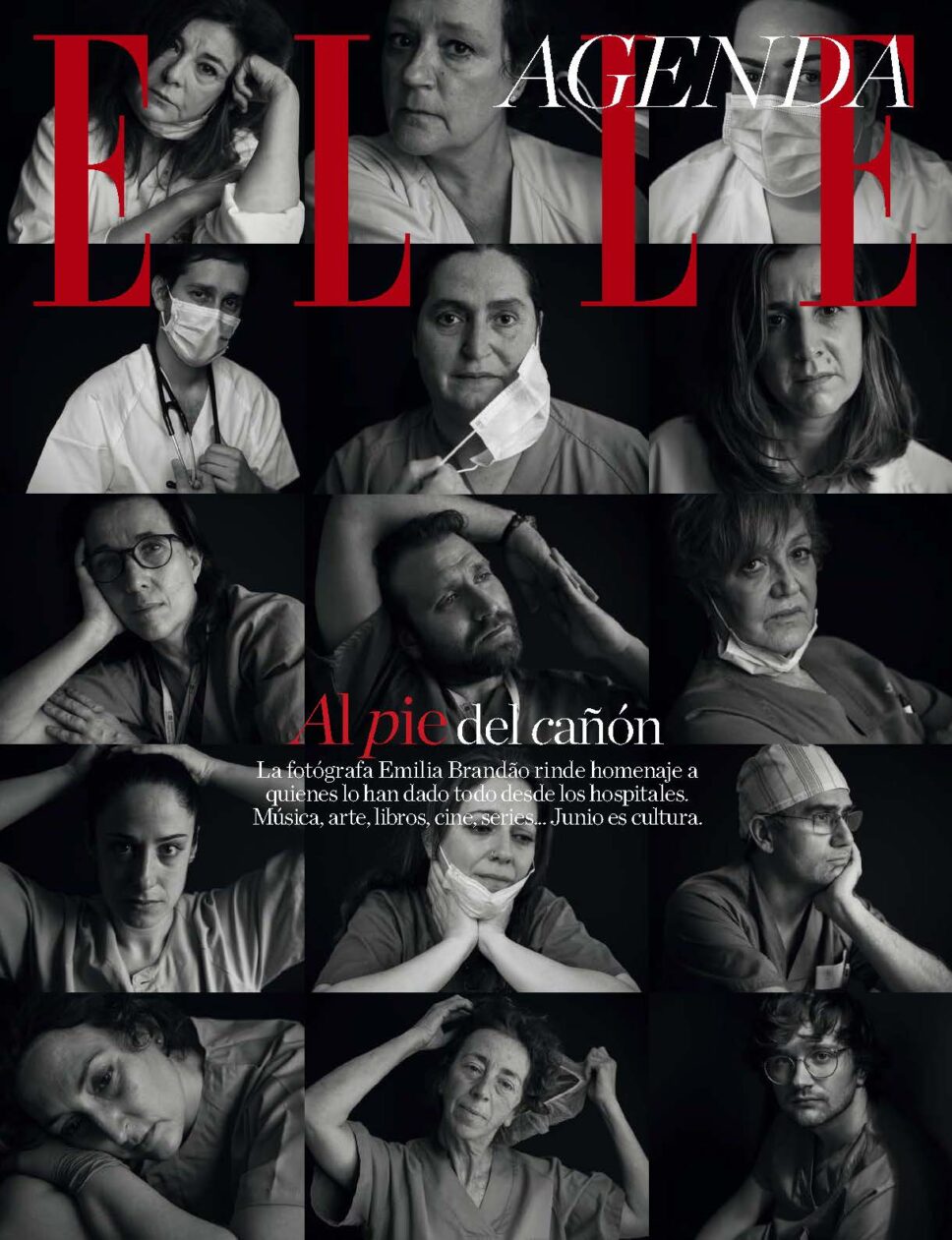
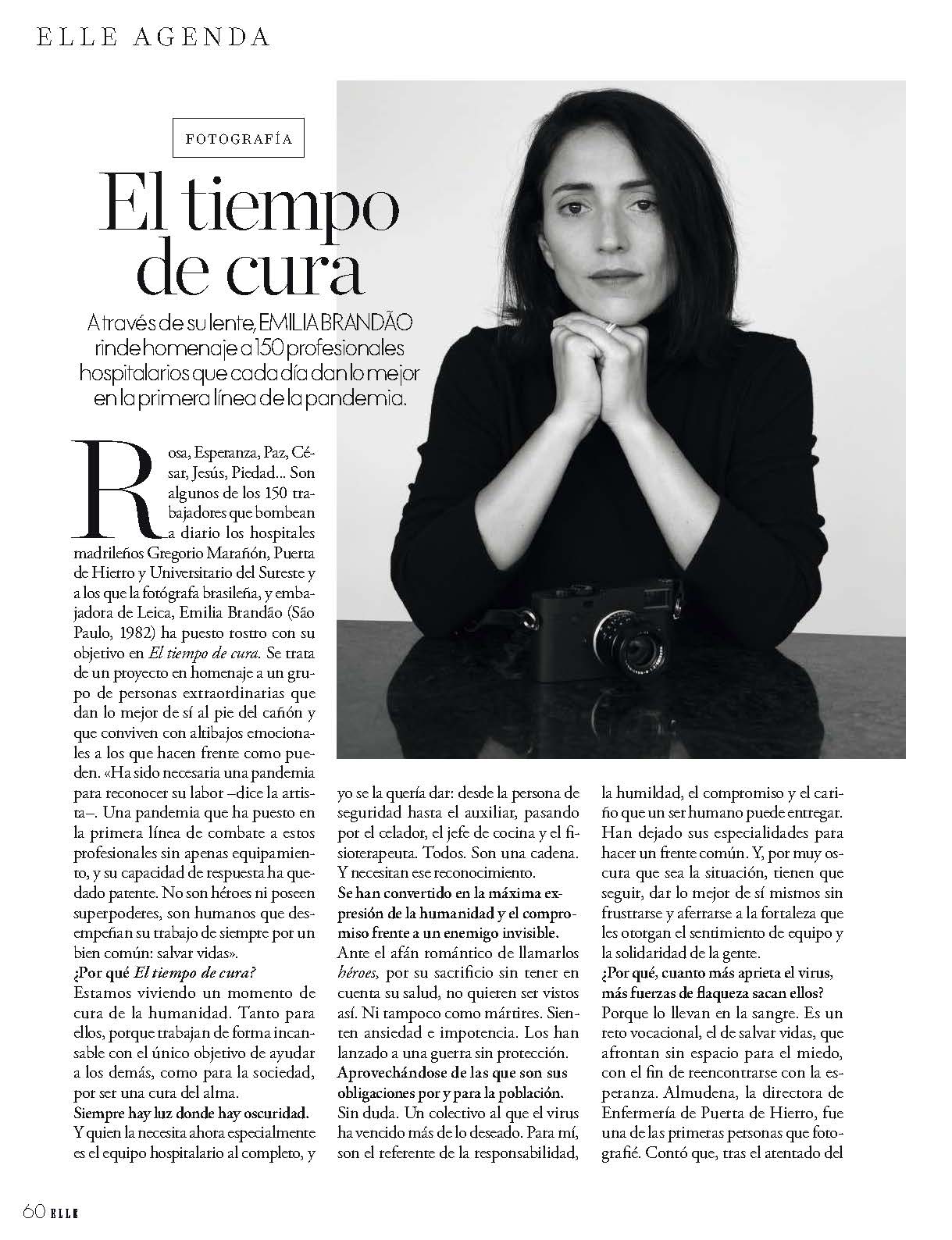
Through her lens, EMILIA BRANDÃO pays tribute to 150 healthcare workers who, every day, give their very best on the front line of the pandemic.
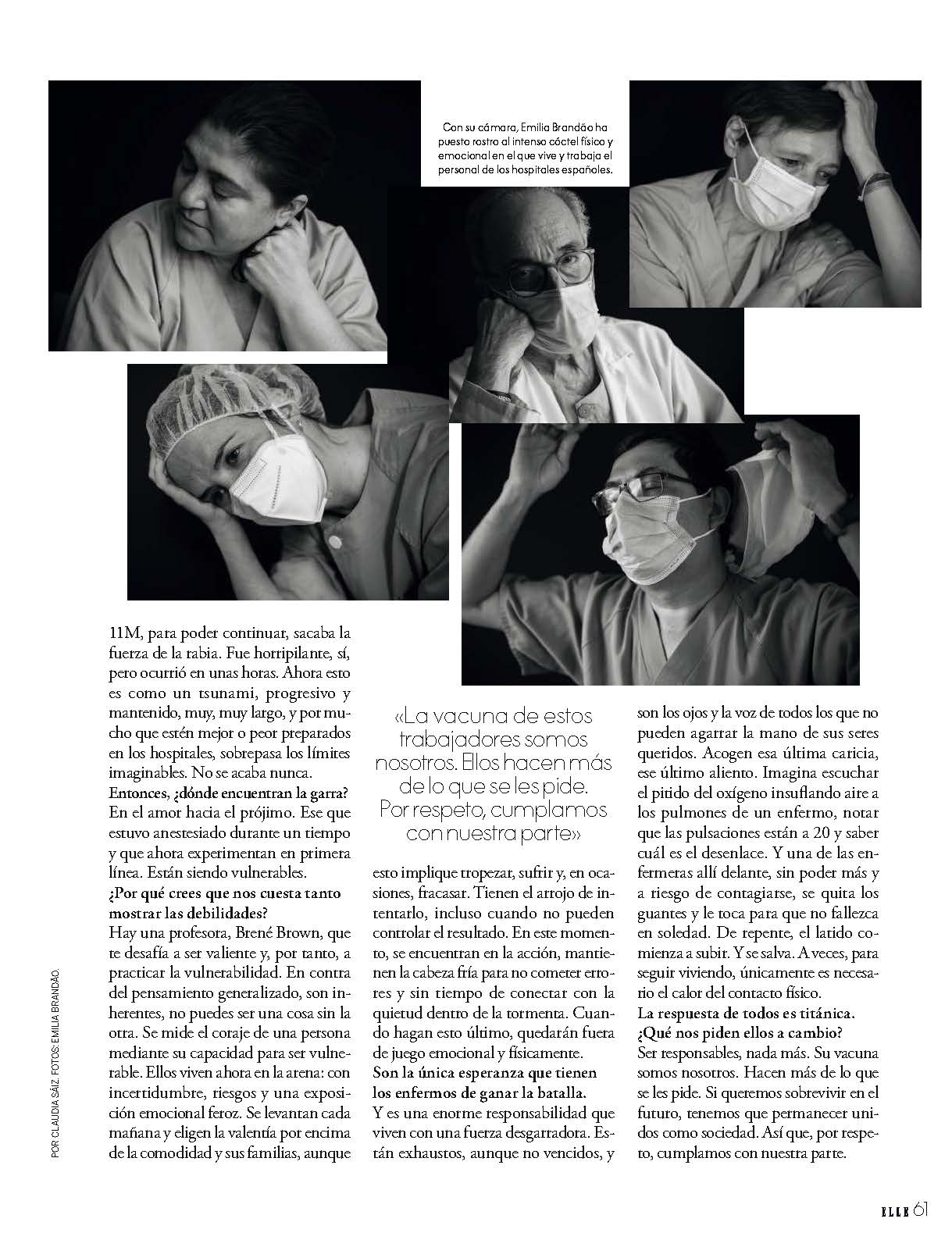
Rosa, Esperanza, Paz, César, Jesús, Piedad… These are some of the 150 workers who serve every day at Madrid’s Gregorio Marañón, Puerta del Hierro and Universitario del Sureste hospitals, and whom the Brazilian photographer and Leica ambassador Emilia Brandão (São Paulo, 1982) portrayed in Time to Heal. The project is a tribute to a group of extraordinary people who give everything they have and face emotional highs and lows as best they can. “It took a pandemic to recognize their work,” says the artist. “A pandemic that put these professionals on the combat line, almost without equipment, and their ability to respond became evident. They are not heroes and they don’t have superpowers; they are human beings doing their usual job for a common good: saving lives.”
Why Time to Heal?
We are living through a moment of healing for humanity. Both for them, who work tirelessly with the sole aim of helping others, and for society, because it is a healing of the soul.
There is always light where there is darkness.
And the ones who need it most right now are the entire hospital team, and I wanted to give them that: from the security guard to the nursing assistant, including the caretaker, the head chef and the physiotherapist. Everyone. They form a chain. And they need this recognition.
They have become the ultimate expression of humanity and commitment in the face of an invisible enemy.
Faced with the romantic urge to call them heroes, for their sacrifice with no regard for their own health, they don’t want to be seen that way. Nor as martyrs. They feel anxiety and helplessness. They were thrown into a war without protection.
Taking advantage of what is, after all, their duty to the public.
Without a doubt. A group the virus has beaten down more than anyone wanted. To me, they are the example of responsibility, humility, commitment and care that a human being can offer. They left their specialties behind to form a common front. And however dark the situation, they have to keep going, giving their best without becoming frustrated and holding on to the strength that comes from team spirit and people’s solidarity.
Why is it that the more the virus presses, the more strength they manage to summon out of weakness?
Because it’s in their veins. It is a vocational challenge, that of saving lives, which they face with no room for fear, in order to find hope again. Almudena, the director of nursing at Puerta del Hierro, was one of the first people I photographed. She told me that after the 11M attacks, to be able to keep going, she drew strength from anger. It was horrible, yes, but it happened within a few hours. Now it’s like a tsunami, progressive and constant, very, very long, and no matter how well or badly prepared the hospitals are, it exceeds all imaginable limits. It never ends.
So where do they find their fighting spirit?
In love for one’s neighbor. That love that had been numbed for a while and that they are now experiencing on the front line. They are being vulnerable.
Why do you think we find it so hard to show our weaknesses?
There is a professor, Brené Brown, who challenges you to be brave and, therefore, to practice vulnerability. Contrary to common belief, the two are inherent to each other; you can’t be one without the other. A person’s courage is measured by their capacity to be vulnerable. They are living in the arena right now: with uncertainty, risk and fierce emotional exposure. They get up every morning and choose courage over comfort and over their families, even though it means stumbling, suffering and, on some occasions, failing. They dare to try, even when they can’t control the outcome. Right now they are in action, keeping a cool head so as not to make mistakes and with no time to connect with the calm inside the storm. When they do, they will be out of the game, emotionally and physically.
They are the only hope the sick have of winning the battle.
And it is an enormous responsibility that they carry with heartbreaking strength. They are exhausted, though not defeated, and they are the eyes and the voice of everyone who cannot hold the hand of their loved ones. They receive that last caress, that last breath. Imagine hearing the whistle of oxygen pushing air into a patient’s lungs, noticing that the heartbeat is at 20 and knowing how it will end. And one of the nurses at the front, unable to take any more and at risk of infection, takes off her gloves and touches him so that he won’t die alone. Suddenly, the heartbeat starts to rise. And he is saved. Sometimes, to go on living, all it takes is the warmth of physical contact.
Everyone’s response is titanic. What do they ask for in return?
To be responsible, nothing more. We are their vaccine. They do more than is asked of them. If we want to survive in the future, we must stay united as a society. So, out of respect, let’s do our part.
Text: Claudia Saíz