GROUP EXHIBITIONS
“SP-ARTE”
Particular Galley | São Paulo/Brazil, 2026
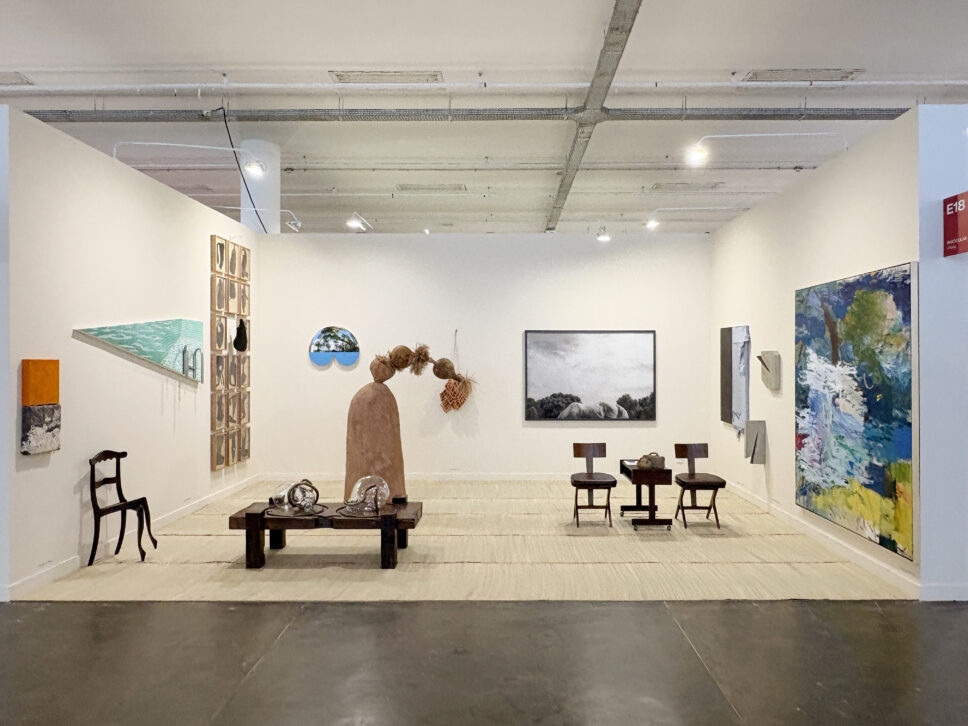
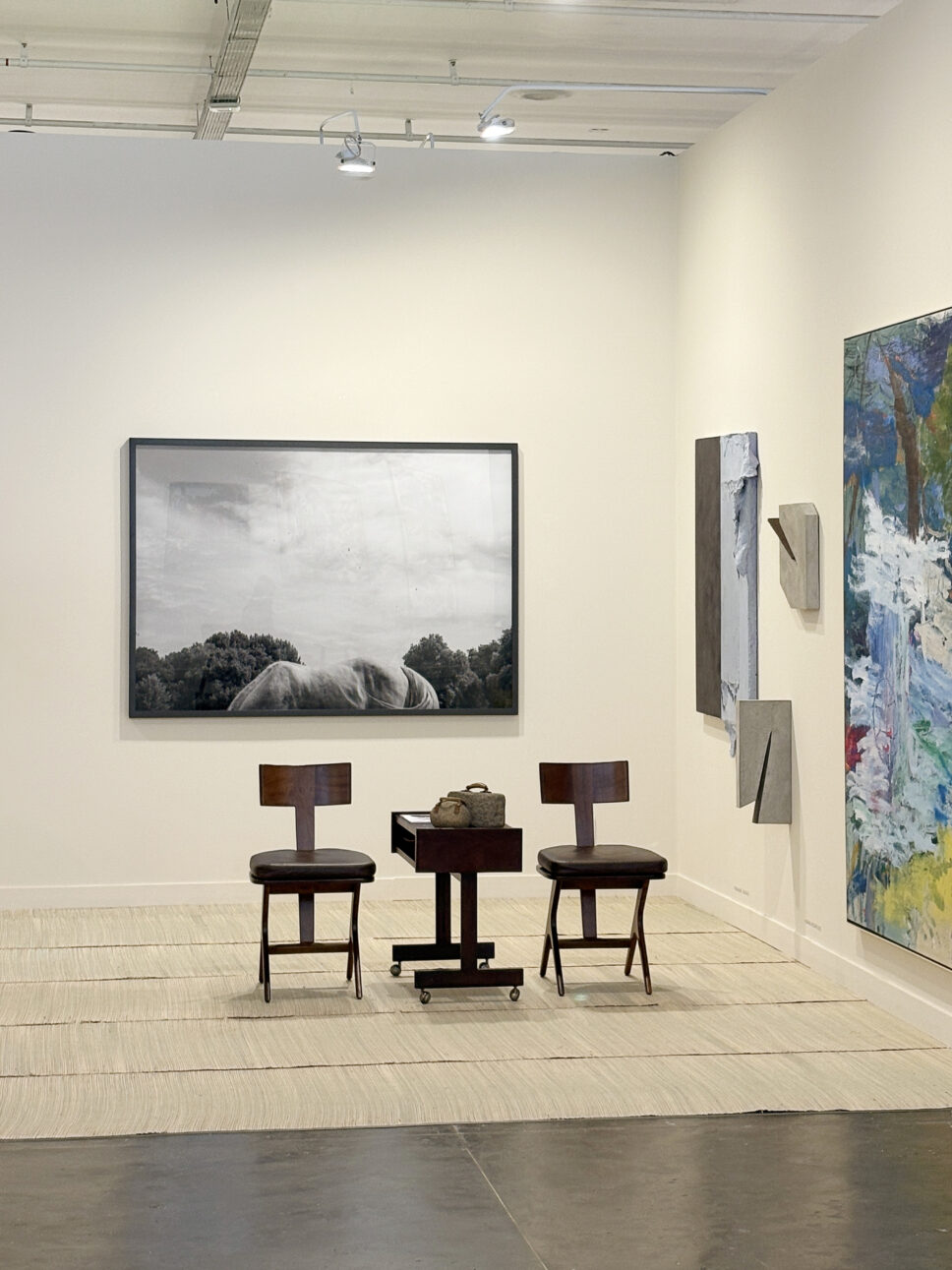
At SP-Arte 2026, Particular Galeria presents a booth curated by Bianca Bernardo that explores the home as a metaphor for shelter — a realm of memory, belonging, and care.
In dialogue with the ideas of Gaston Bachelard and Yi-Fu Tuan, the proposal expands the notion of home beyond its material structure, understanding it as a foundational space for sensory experience. While the physical home organizes the world into inside and outside, spiritual homes — woven from ancestry, language, and faith — shape our identity and transform space into a place of meaning and affection. As Bachelard observes, “the home is the nest of the imagination,” and Tuan adds that “place is space imbued with meaning and emotional value.” The home is matter and dream, tangible shelter and inner landscape: we not only inhabit it, but are also shaped by it.
By bringing these dimensions together, the project invites reflection on inhabiting as an ethical and collective act. Building, preserving, and caring extend across the visible and invisible spaces that shape us. In times of environmental and social urgency, to consider the home is to recognize the interdependence between the intimate and the collective — to understand that every shelter entails shared responsibility.
Curator: Bianca Bernardo
Particular Gallery
Architecture: Tatiana Coutinho
São Paulo/Brazil
Abril.2026
Artwork: BERNI series
Artists: Ana V. Lopes – Andrey Guaianá Zignnatto – Cleverson Oliveira – Douglas Knesse – Dudu Garcia – Emilia Brandão Carneiro – Fernando Burjato – Geraldo Marcolini – Isabê – Liana Nigri – Liliana Sanches – Luiz Martins – Luiz Philippe – Mayra carvalho – Maria-Carmen Perlingeiro – Marina Rodrigues – Tony Camargo
“A Chama de uma Centelha”
Ateliê Casa Um | São Paulo/Brazil, 2026
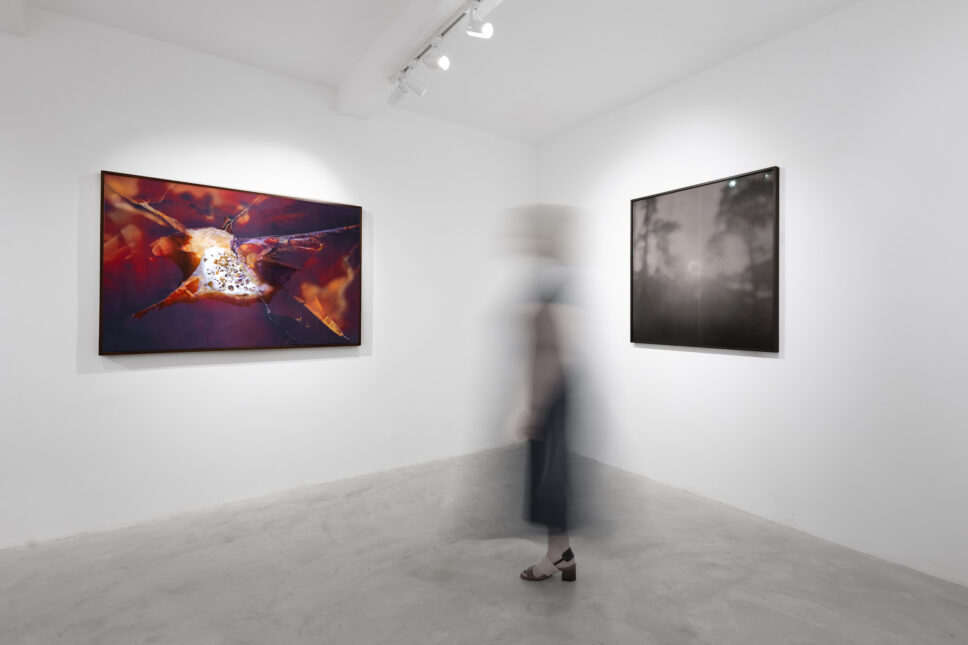
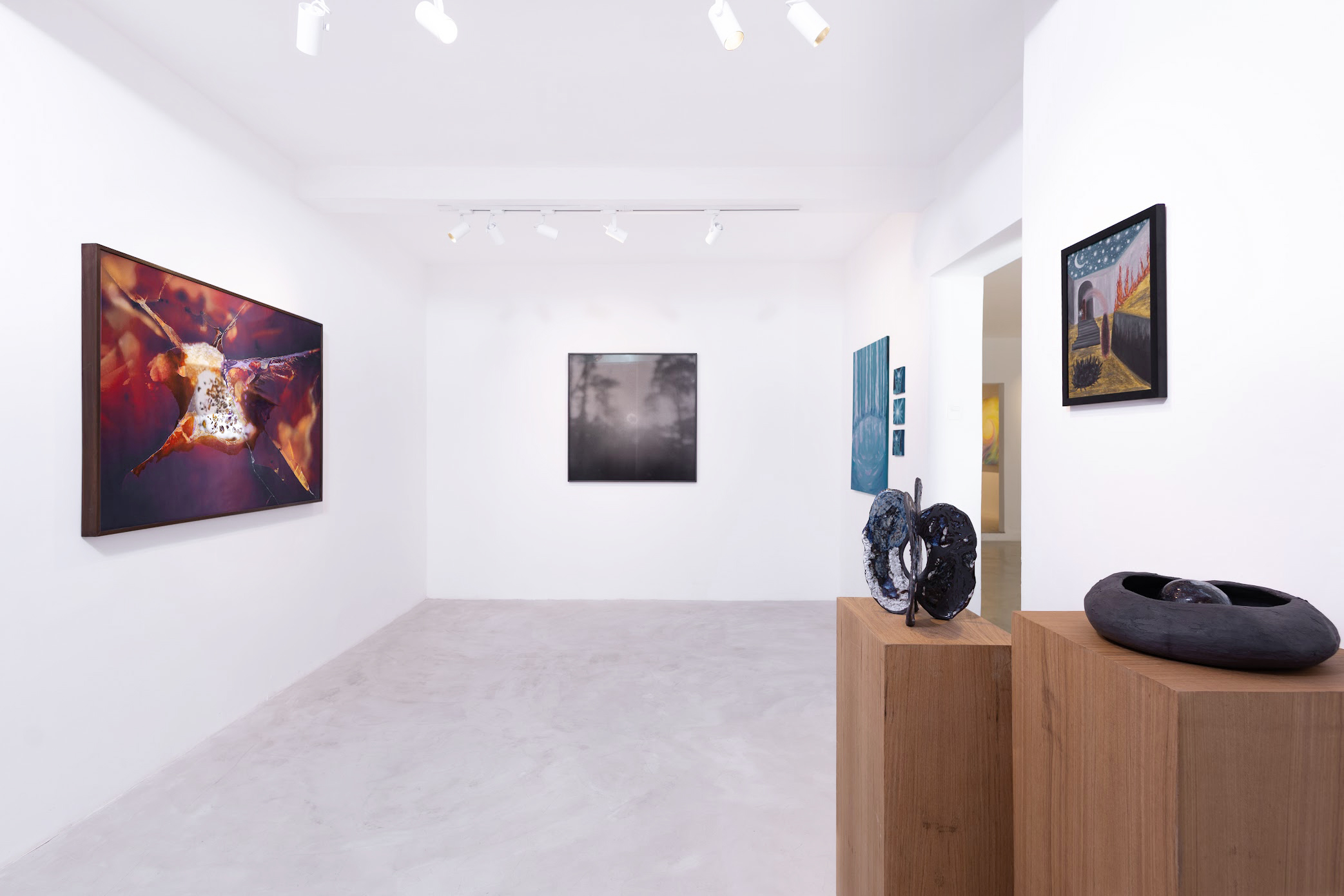
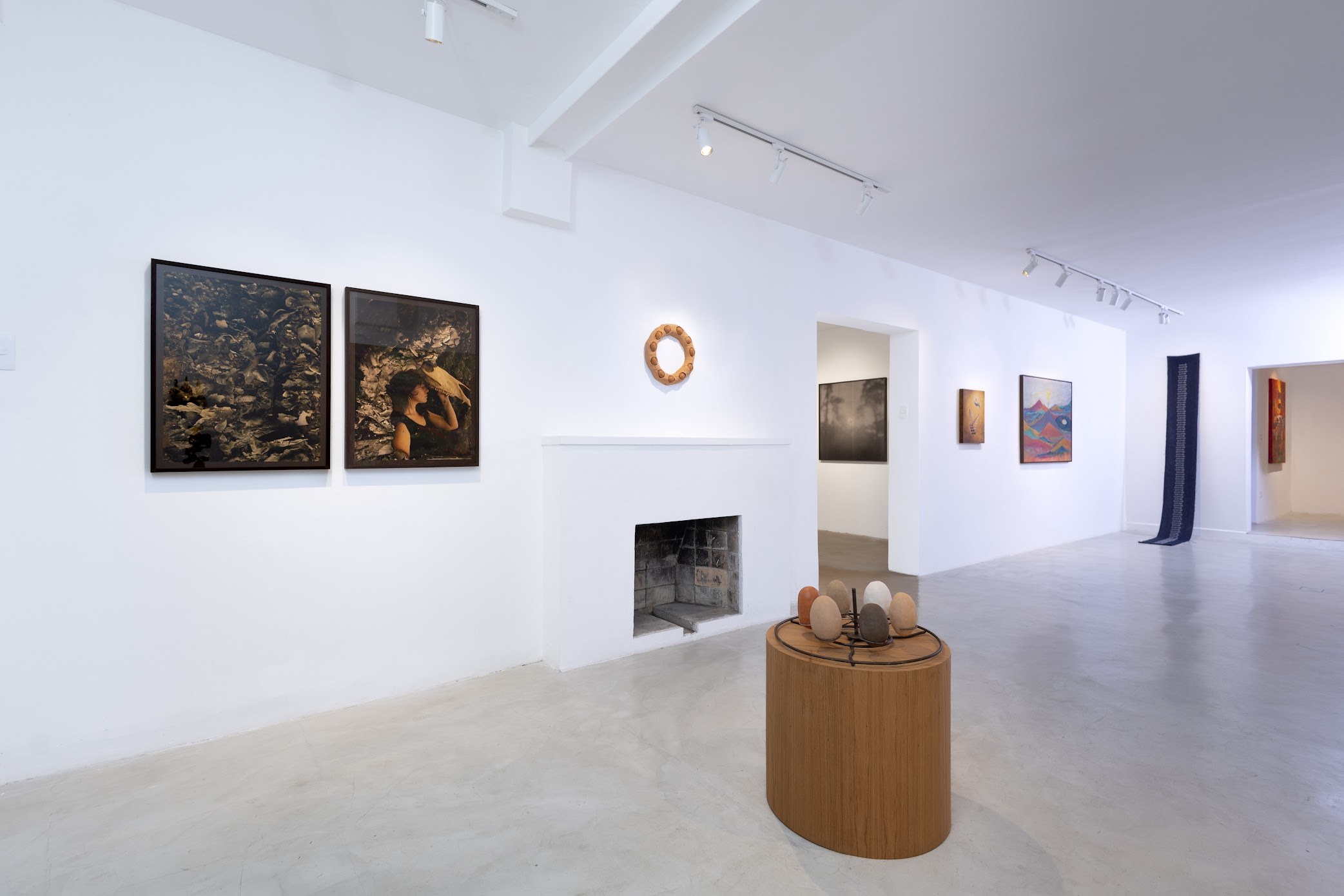
Spark is the instant when raw matter awakens to itself—a flash, an intuition. An incandescent point of light that cleaves the darkness before the eyes can comprehend it. This fiery particle, taking the form of a spark, a flash or an ember, seemingly flying solo, emerges with an electrifying force, without control or awareness of its own energy and power. Yet, however insignificant it may feel, this brief flare is fertile enough to kindle a bonfire or spread and set an entire forest ablaze.
Over the past two months, 23 Brazilian visual artists living in Brazil, Europe and the United States took part in the first edition of Flamma—the mentoring and critical-curatorial guidance programme of Spiritual in Art, a platform I founded and where I conduct research. With my guidance and encouragement, the group, whose practices already shared an interest in exploring spiritual, metaphysical and invisible properties, was able to broaden and refine its research, transmute old beliefs and expand its practice, reaching, in resonance, the highest point of its artistic and spiritual journey to date.
Through the exchange of experiences, both positive and complex, surrounding the vastness of fire during our gatherings, the insight was channelled that this natural element needed to guide the exhibition like a torch. As this period unfolded, the artists were often, even to their own surprise, striking one stone against another to create a spark. And although they experienced the entire process collectively, each discovered their own timing, rhythms, feelings and possibilities for artistic creation, in a daily exercise intended, figuratively, to invite a bolt of lightning to strike their minds, bringing the messages that could be portrayed in this exhibition.
Gnostic traditions held that every human being possesses a scintilla animae—a spark of the soul—a seed of light or a fragment of a greater God-fire seeking to return to its source. The concept took shape in medieval mysticism, particularly through the theologian Meister Eckhart, who maintained that this spark resides in the depths of the soul, at the meeting point between the human and the divine, or the Higher Self. It is within this innermost core that we connect with the whole. The spark is the invisible sun at the centre of the human being: at once the smallest thing and the most essential.
The Corpus Hermeticum and the Emerald Tablet, attributed to Hermes Trismegistus, reveal that primordial fire does not belong to us; we are made of it. The seven Hermetic principles that structure this cosmology run through the territory of this exhibition, particularly three: the principle of Correspondence, encapsulated in the maxim “as above, so below”, which reveals that the inner flame and the fire of the cosmos are the same force on different scales; the principle of Vibration, according to which nothing is at rest and everything pulses at shifting frequencies, like fire itself, which is never the same for two consecutive instants; and the principle of Polarity, which teaches that light and shadow, creation and dissolution, are not absolute opposites but degrees within the same spectrum. In this view, darkness does not precede fire by accident; it is the condition that makes fire visible.
The exhibition begins with fire in its most earthly, ardent and ancestral form, moving through interpretations of fiery imagery until it reaches a state of greater transcendence. There are references to alchemy, where fire is the great agent of transformation, in the marriage between the sun and the moon. To the alchemical Great Work, which passes through the black of putrefaction and the white of purification to the red of the philosopher’s stone, when the alchemical egg opens to reveal gold. Tarot is also invoked, with Wands as the suit of fire, resonating in one of the pieces in this exhibition and evoking expansion through sharing and collective ritual. Carl Gustav Jung’s psychic individuation is also present: in the passage through one’s own inner densities as a condition for ascending to higher states of consciousness, culminating here, within the Vedic tradition, in the figure of Agni, the deity of fire. In the Bhagavad Gita, a sacred Hindu text: “not lighting the fire means refusing to accept the command of the self”.
The works gathered here traverse this symbolic field through different artistic languages and techniques: painting in oils, acrylics, watercolours, soft and oil pastels, pigments and spray paint; staged, multiple-exposure and expanded photography; video, projection and installation; ceramic sculpture; and hand-embroidered textiles incorporating words or fragments of mirror, decorative stones and trimmings. The unconscious erupts in dreamlike landscapes, chromatic veils, processes of transmutation, peaks of channelling, connections with nature and the cosmos, portals and rituals.
In The Psychoanalysis of Fire, Gaston Bachelard proposed that fire is the element that most invites rêverie, that floating state between dreaming and waking in which the imagination deepens rather than disperses. In The Flame of a Candle, Bachelard explored the enchantment of a solitary flame and what it can awaken in the dreamer, and it is from this thought that the title of this exhibition emerges: the presence of a flame born from the smallest thing that, as it endures over time, sheds ever more light. The spark is this inner calling within the artists; the flame, the energy the work emits when it encounters another. A single spark is enough to set ignition in motion; a single work that touches its own true depth can illuminate those who contemplate it. This is the invitation extended by the exhibition and the programme from which it arose: for each person to recognise the spark that belongs to them and, in doing so, kindle it.
Text: Marina Bortoluzzi
—
Curated and produced by: Marina Bortoluzzi
Ateliê Casa Um, São Paulo, Brazil
Work presented: Study of the Sun I
April 2026
“A Gente Ama o que Não Conhece “
MITS Gallery | São Paulo/Brazil, 2025
The exhibition “We Love What We Do Not Know”, curated by Victor Valery at the invitation of MITS Galeria, presents a selection of works by seven artists chosen by VANDL ART, spanning painting, photography and sculpture. Inspired by Brenda Nicole’s painting of the same name, the exhibition challenges Saint Augustine’s maxim, “We only love what we know”, suggesting that love and appreciation can emerge from the unknown and the unexplored.
The curatorial approach draws on contemporary debates about cultural production and circulation as its conceptual foundations, challenging the chronological linearity of art history and evoking techniques, movements and formats from different eras. Each artist thus contributes their own perspective, reflecting the spirit of the times and offering the public a distinctive vision, creating a space for critical experimentation through diverse perspectives and aesthetics. By navigating central themes such as identity, abstraction, cultural memory, transformation and the relationship between forms and materiality, the works weave a complex network connecting the artistic with the everyday.
The exhibition “We Love What We Do Not Know” therefore seeks to foster the emergence of a new generation of artists, admirers and collectors. By exploring new perspectives with aesthetic force, the exhibition broadens horizons and challenges conventions, presenting works that subvert expectations and encourage the public to rethink their visual, conceptual and emotional frames of reference.
Text: Victor Valery
Artists: Brenda Nicole, Emilia Brandão Carneiro, JAMEX, Josh Brandão, Raquel Pater, Ricardo Bueno, Vivi Rosa
Curated by: Victor Valery
Produced by: VANDL ART
Galeria MITS, São Paulo, Brazil
Series presented: When Winter Met Spring
September 2024
“Memory, identity and Territory”
BNP Paribas HQ | São Paulo/Brazil, 2025
Memory, Identity and Territory
“Between the intimate and the collective, between the lived and the imagined place, memory—of a mutable nature—and individual as well as shared identity construct territories that transcend geography, unfolding into spaces of belonging, affection, and narrative. The exhibition Memory, Identity, and Territory brings together works by Emilia Brandão Carneiro and Gabriela Stragliotto who, within their poetic universes, reveal different ways of inhabiting and inscribing the world. In this encounter, we are invited to revisit places, reimagine stories, and recognize memory as a vital force in the weaving of both the individual and the collective, challenging us to occupy territories in constant transformation.
In the photographs of Emilia Brandão Carneiro, territory emerges as an extension of sensibility. In Sentimental Journey (2016–2019), swans glide across the waters of the River Seine, near the Île de la Jatte in Paris. Wrapped in mist and silence, their suspended bodies condense the poetics of the interval that runs through her work: that which does not settle, yet endures. The use of black-and-white film, multiple exposures, and medium format accentuates this aesthetic of suspension, where time expands and memory settles in subtle layers. More than records, her images are pauses—fragments that reveal invisible affections between space and experience.
This contemplative gaze also manifests in Berni (2020–2022), which follows the final days of a professional show-jumping horse retired between Portugal and France. The animal body, at the end of its cycle, merges with the landscape in ritual silence. In Performance of a Dream (2018), the forest of Fontainebleau becomes the setting for a filmed and photographed choreography, created in collaboration with Marina Droghetti and Lital Weizman, dissolving boundaries between body, nature, and imagination. In Paris Glacial (2017), a heavy snowfall transforms the city into a deserted and suspended landscape, reinforcing the atmosphere that permeates her entire body of work.
In Gabriela Stragliotto’s works, memory takes on dreamlike and spectral contours. Her paintings, drawings, and installations construct landscapes inhabited by anonymous figures—presences in transit between appearing and disappearing. Born in the countryside of Rio Grande do Sul, with experiences in urban centers and a background in art and cinema, the artist develops her own visual lexicon, structured in series that repeat, dissolve, or transform. Her poetics reflect displacement and impermanence as central aspects of identity and contemporary experience.
Memory, Identity, and Territory invites the public to travel these paths between riverbanks, distant cities, and constructed landscapes, recognizing in the traces left by the artists something of themselves: an image, a sensation, a story that also runs through us. By interweaving remembrance, subjectivity, and space, the exhibition reaffirms territory as a symbolic and sensitive field where experiences are inscribed and reconfigured. The works operate as affective cartographies, revealing ways of being in the world—always in transit, always in transformation.”
Nuria Vieira, curator
Artists: Emilia Brandão Carneiro and Gabriela Stragliotto
“Girls just wanna have fun”
MOVART Gallery | Lisbon/Portugal, 2025
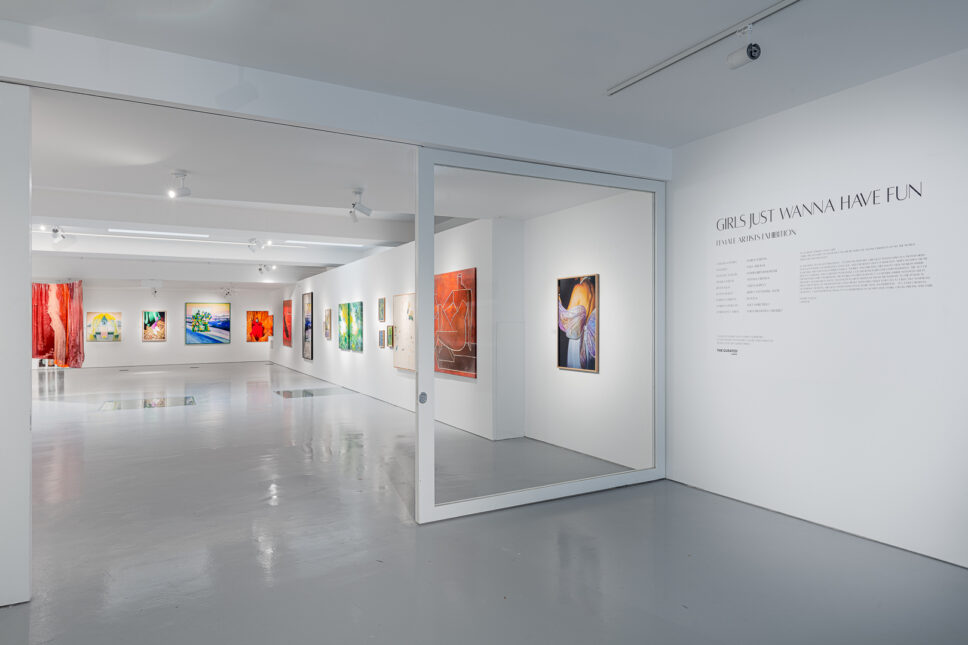
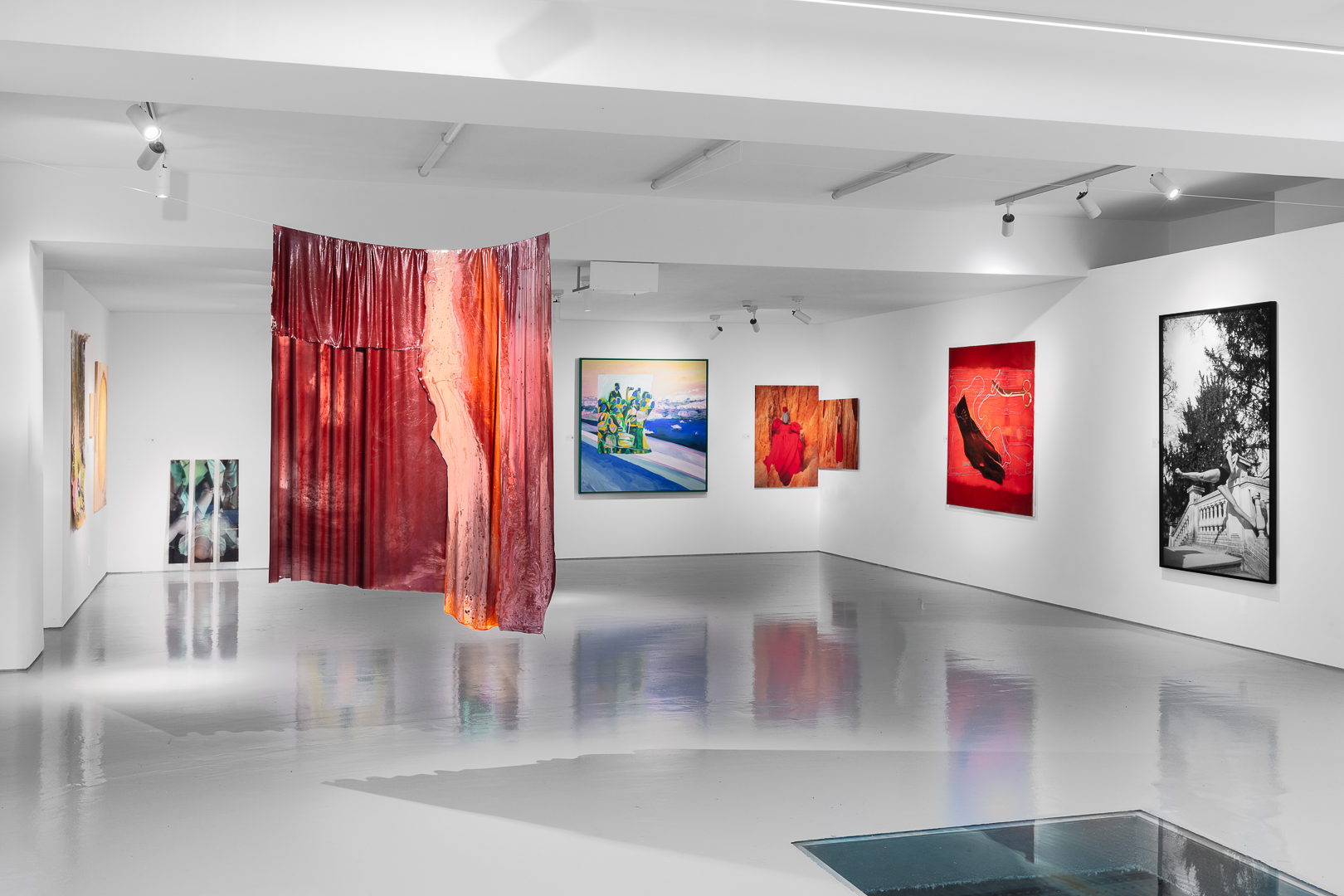
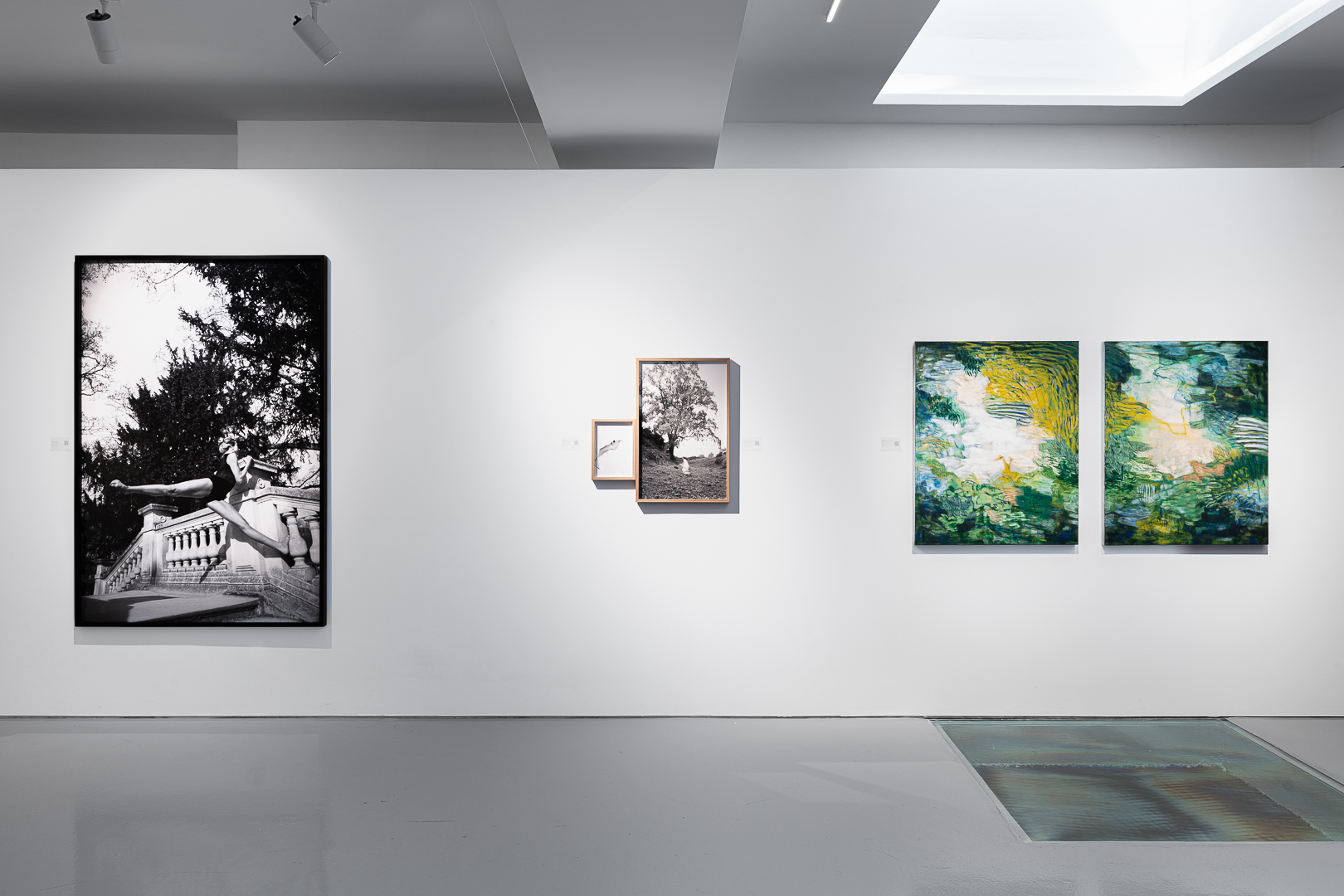
“Girls Just Wanna Have Fun” transforms play into power, laughter into language, and creativity into community. When women create together, they nourish one another’s energy, stories, and dreams. They invent new worlds where beauty, courage, and curiosity intertwine. Collaboration becomes empowerment; the creative act becomes celebration.
The works on view reflect a universe where intuition meets memory, matter meets myth, and emotion meets freedom. From the intimate to the political, from the playful to the profound, each artist adds her unique voice to a collective symphony of female creation. In this space, beauty takes shape through joy, creativity multiplies through connection, and female presence ceases to be the exception and becomes the rule.”
Text: Federica Elena
Artwork: “Pas de Deux”
(120 × 180 cm, black-and-white photograph) Dancer Marina Droghetti, performance in Paris.
Curated: Federica Elena & Irina Gordienko (The Curated Lisbon)
Venue: Movart Gallery, Lisbon, Portugal.
Exhibition dates: 4 December 2025 – 30 January 2026
“OpenWalls Arles”
Galerie Huit & British Journal of Photography | Arles/France, 2023
“Catalogue”
F&deO Gallery | Madrid/Spain, 2022
“South.Southwest”
RE|Space Gallery | Berlin/Germany, 2020
The works from the South.Southwest collection exhibited at re|space gallery in Berlin are a curated visual insight into Latin American identity. The visual palette is as diverse as the Latin American people, portraying culture, nature, folklore and the everyday. This fine art photography collection has been compiled by the artists Sebastián Liste, Christina de Middel, Álvaro Ybarra Zavala, Laura León, Jesús Rocandio, Adriana Zehbrauskas, Stephen Ferry, Tomás Munita and Emilia Brandão to showcase the strength of contemporary Latin American photography. As photographers, the artists are under the patronage of Leica Iberia, have worked extensively with world-renowned photography agencies such as Magnum and Getty Images, are represented in established fine-art collections such as the New York Metropolitan Museum and have been published in major international publications such as Time Magazine. Though partially stemming from documentary photography projects, the works within this collection have been chosen for their distinct artistic value. What distinguishes this collection from documentary photography is the artistic approach. It is not only the subject of the photographs that begs for a fine art context, but likewise the style and composition. The large scale of many of the works, mounted and framed demand the attention of the viewer much like a history painting. Similarly, the smaller diptychs reference modes of display common in national galleries. Each work contributes to the visual narrative that is the South.Southwest collection. Sometimes atmospheric, sometimes poetic, sometimes biographical the works document and celebrate a contemporary Latin American view on life. What makes this photography collection so unique, is the fact that each of the works is a single-edition print with an unquestionable provenance. This is guaranteed by a four-part identification process involving the certification through Leica, the photographer, the gallery and the buyer. The buyer gains the exclusive rights to a work that will enhance any photography collection. Through their patronage, the collector becomes a key player in the conservation and future of the ever-growing South.Southwest collection. The exhibition is shown exclusively at re|space gallery in Berlin marks the inaugural showing of the collection world-wide. With the objective of bringing contemporary Latin American photography to a wider audience, the exhibition hosted in Berlin, home to people from about 190 nations, allows the works to be seen first-hand by art and photography enthusiasts from around the world. Not only does this widen the reach of the photography collection itself but also the cultural exchange between Latin America and the rest of the world. The works from the South.Southwest collection chosen for this exhibition share a deep connection to life in Latin America. While this is the first time the works of the South.Southwest collection are exhibited publically, the collection is ever-growing and thus each work becomes part of its legacy.